Corporate teams face rising pressure to deliver results in competitive markets. Departments often operate in silos, weakening collaboration and slowing progress. Corporate team-building activities address this challenge by creating structured, goal-driven shared experiences. These experiences improve communication, strengthen trust, and align teams with company objectives. Organizations that invest in purposeful team development often see stronger engagement and measurable performance gains.
What Are Corporate Team Building Activities?
Corporate team building activities are structured programs that improve collaboration, communication, and accountability in the workplace. Companies use these initiatives to solve internal challenges such as low morale, unclear roles, or weak cross-functional teamwork. This structured approach links employee interactions to real business outcomes rather than providing casual entertainment. When leadership aligns activities with strategic goals, teams develop habits that support productivity and long-term growth.
Communication-Focused Team Exercises
Communication-focused team exercises improve clarity and reduce misunderstandings across departments. Teams engage in structured discussions, timed problem-solving tasks, or role-play scenarios that require active listening. This practical setting encourages employees to express ideas clearly and respond constructively to feedback. Managers observe how participants handle conflict and adapt messages under pressure. After the session, facilitators connect insights to daily workflows and client interactions. Over time, consistent practice strengthens workplace dialogue and builds confidence.
Trust-Building and Accountability Activities
Trust-building activities create shared responsibility through collaborative challenges. Teams rely on each member’s contribution to achieve defined outcomes. This collective effort highlights strengths while exposing gaps in coordination. Employees learn that accountability directly affects group success, not just individual performance reviews. Leaders use post-activity reflections to clarify expectations and reinforce standards. As trust deepens, teams approach complex projects with greater cohesion and reliability.
Psychological Safety and Team Cohesion
Psychological safety refers to a team’s shared belief that members can speak openly without fear of embarrassment or punishment. Corporate team-building activities help create this safety through structured interaction. When employees collaborate in controlled challenges, they practice vulnerability in low-risk environments. This repeated exposure builds confidence in group settings. Research in organizational behavior shows that psychologically safe teams perform better and innovate more frequently. Strong cohesion emerges when individuals trust that their contributions will receive respect.
Shared Challenges and Brain-Based Trust
Shared challenges activate brain mechanisms of cooperation. When teams solve problems together under moderate pressure, they release chemicals associated with bonding and motivation. This biological response strengthens memory linked to collaboration. Corporate team-building activities use this principle by encouraging coordinated effort toward common goals. Over time, repeated shared success builds stronger relational connections. These neurological patterns explain why experiential activities often produce lasting workplace improvements.
The Best Corporate Team Building Experiences
Strong teams do not form through routine meetings or shared office space alone. Organizations build real cohesion when they create intentional, structured shared experiences. Corporate team building activities provide that structure while targeting communication, trust, and collaboration. The following sections explain the most effective approaches and why they deliver measurable results.
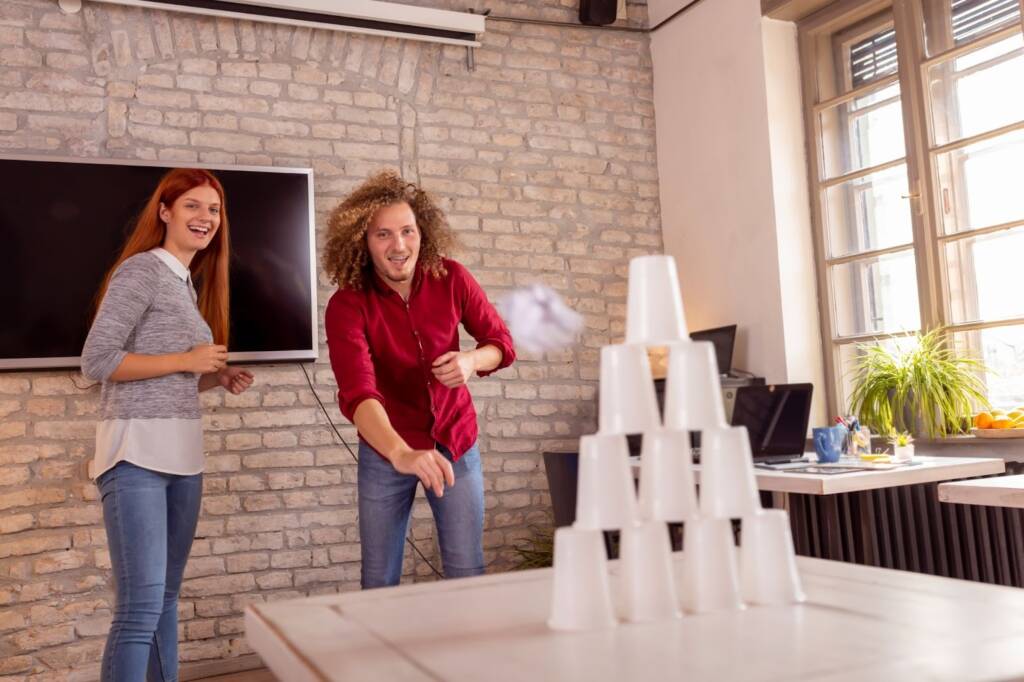
In-Office Team Building Strategies
In-office team building strategies strengthen collaboration without requiring travel or high costs. Organizations often choose this format to minimize disruption while addressing teamwork concerns. This practical solution integrates easily into regular business schedules. When executed with clear objectives, internal activities generate visible improvements in morale and efficiency.
Escape Room and Problem-Solving Games
Escape room simulations and structured problem-solving games test teamwork under controlled pressure. Teams analyze clues, assign roles, and adapt strategies within time limits. This fast-paced environment mirrors real project deadlines and client demands. Participants must communicate clearly to avoid errors and wasted effort. Leaders observe leadership styles and decision-making patterns during the activity. A structured debrief links these insights directly to workplace performance.
Skill-Sharing Workshops for Cross-Training
Skill-sharing workshops allow employees to teach colleagues practical knowledge related to their roles. For example, a sales manager may explain negotiation tactics while an HR specialist reviews compliance basics. This knowledge exchange reduces departmental silos and broadens understanding across functions. Employees gain respect for diverse expertise within the organization. This collaborative learning culture strengthens adaptability and internal support systems. Over time, cross-trained teams respond more effectively to changing business demands.
Internal Innovation Labs
Internal innovation labs focus on solving actual company challenges through structured brainstorming. Leaders present a defined business issue, such as customer retention or service optimization. Teams then generate solutions and evaluate feasibility within a set timeframe. This organized creativity encourages balanced participation and constructive debate. Employees see how their ideas influence strategy and operational decisions. As a result, innovation becomes part of daily culture rather than a separate initiative.
Outdoor Corporate Team Building Events
Outdoor corporate team building events create shared experiences outside formal office environments. Companies often select these activities to encourage openness and reduce hierarchy. This environmental shift promotes authentic interaction among staff at all levels. Teams return to work with stronger interpersonal connections and renewed motivation.
Adventure-Based Team Challenges
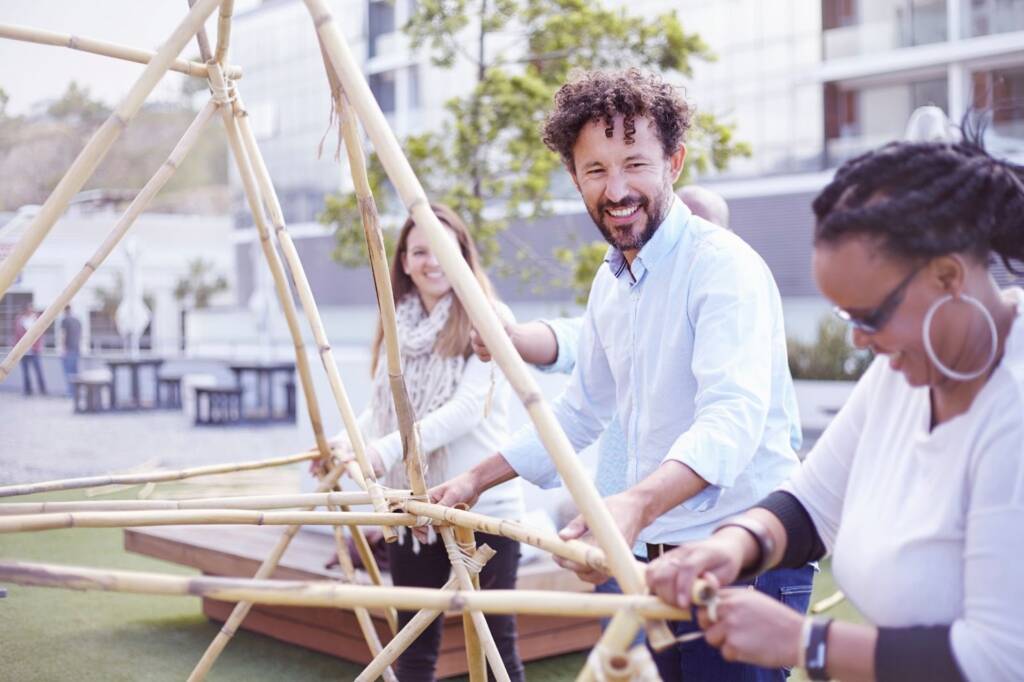
Adventure-based challenges include obstacle courses, ropes courses, or guided outdoor simulations. These activities require coordination, encouragement, and clear planning. Participants confront physical and mental obstacles that demand teamwork. This experiential learning model strengthens resilience and adaptability under pressure. Employees gain confidence in their collective abilities through shared achievement. The sense of accomplishment often translates into improved workplace collaboration.
Corporate Volunteer Programs
Corporate volunteer programs align team building with social responsibility. Organizations partner with local nonprofits, schools, or environmental initiatives. This community-focused effort fosters unity around a shared purpose beyond profit. Employees feel proud to represent their brand positively in their location. Research from workplace engagement studies shows that purpose-driven initiatives support morale and retention. Teams that serve together often develop deeper trust and stronger internal bonds.
Company Sports and Wellness Events
Company sports tournaments and wellness challenges promote teamwork through friendly competition. Departments may form mixed teams to encourage cross-functional interaction. This active participation reduces stress and supports employee well-being. Health-focused programs demonstrate that leadership values balance alongside productivity. Employees interact informally, which improves communication back in the office. A workplace culture that promotes wellness often sees higher engagement and lower burnout rates.
Virtual Team Building for Remote Staff
Virtual team building activities connect distributed employees through structured digital engagement. Remote teams face challenges such as isolation and reduced spontaneous communication. This digital format recreates shared experiences using video platforms and collaboration tools. Organizations that invest in virtual initiatives maintain cohesion across geographic boundaries.
Online Team Competitions and Games
Online competitions such as trivia contests or digital scavenger hunts encourage real-time collaboration. Teams communicate through video calls and messaging platforms to complete challenges. This interactive environment keeps remote employees engaged and focused. Participants practice clear communication despite physical distance. Shared victories strengthen camaraderie within virtual teams. After consistent participation, remote staff often report improved connection and morale.
Virtual Learning and Development Sessions
Virtual workshops combine skill development with team interaction. Facilitators guide participants through exercises on leadership, communication, or conflict management. This structured discussion builds competence while encouraging peer exchange. Employees apply practical strategies to current workplace scenarios. Companies may track outcomes using feedback surveys and productivity metrics. Ongoing development supports both performance and professional growth.
Informal Virtual Social Meetups
Informal virtual social meetups create space for personal interaction beyond project updates. Teams may host themed coffee chats, cultural exchanges, or interest-based discussions. This relaxed setting allows employees to share experiences and hobbies. Stronger personal familiarity supports smoother collaboration during complex tasks. Remote staff feel more connected to colleagues and the company culture. Over time, social interaction strengthens loyalty and engagement.
How to Choose the Right Activities
Choosing the right corporate team building activities requires alignment with company goals and workforce needs. Organizations must consider team size, budget, location, and service model before planning events. This strategic evaluation prevents wasted effort and unclear outcomes. When leadership defines measurable success indicators, team building becomes a targeted business investment.
Align Team Building With Business Goals
Aligning team building with business goals means selecting activities that address defined challenges. For example, a service-based company seeking to improve the customer experience may focus on communication workshops. A technology brand aiming to boost innovation may adopt structured brainstorming labs. This targeted approach increases relevance and employee engagement. Leaders should measure results through surveys, performance metrics, or retention data. Clear evaluation methods support continuous improvement and long-term impact.
Consider Team Size and Structure
Considering team size and structure helps determine the right activity format. Smaller teams often benefit from interactive workshops that encourage deep discussion. Larger organizations may require scalable events such as company-wide challenges or retreats. This structural assessment prevents overcrowding or disengagement during sessions. Leaders should also evaluate department diversity and cross-functional needs. A well-matched format increases participation and overall effectiveness.
Evaluate Budget and Resources Carefully
Evaluating budget and internal resources guides realistic planning decisions. In-office programs often cost less than off-site retreats or travel-based events. Virtual activities reduce venue and accommodation expenses while maintaining engagement. This financial clarity allows leadership to allocate funds wisely without sacrificing quality. Teams should also assess the facilitator’s expertise and the available tools. Thoughtful budgeting supports sustainable team-building efforts.
Invest in Corporate Team Development
Corporate team building activities create practical opportunities for stronger collaboration and shared accountability. Companies that prioritize structured team development often outperform competitors in engagement and retention metrics. This sustained focus builds a cohesive culture that adapts quickly to change. Organizations that commit to thoughtful team building strengthen both internal operations and long-term growth potential.
Visit the Rest Yourself River Ranch blog for deeper insights, planning guidance, and fresh ideas for your next team experience.